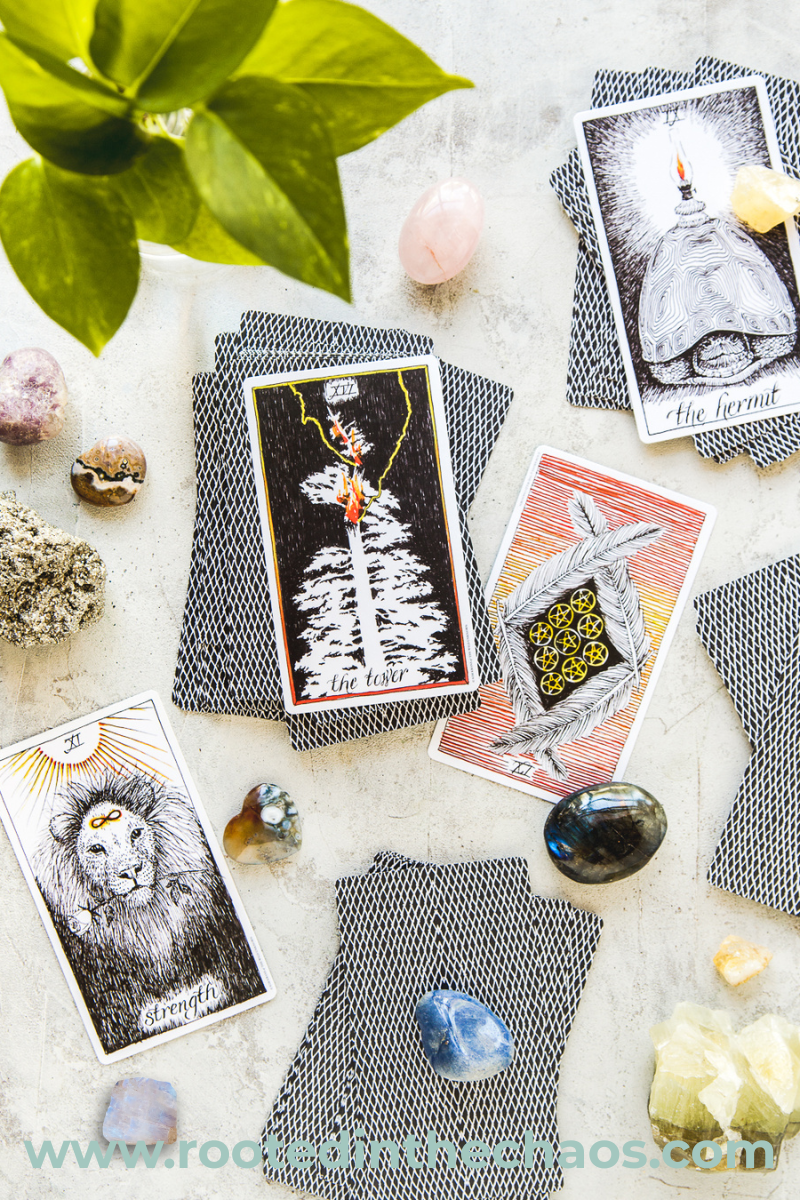
When people hear the word tarot, they often imagine crystal balls, dramatic predictions, or someone telling them exactly what will happen next. That’s never been how tarot works for me.
I don’t use tarot to predict the future. I use it the same way I use a journal, a long walk, or — yes — even my houseplants: as a mirror.
Tarot Isn’t Telling You What Will Happen
It’s Showing You What’s Happening
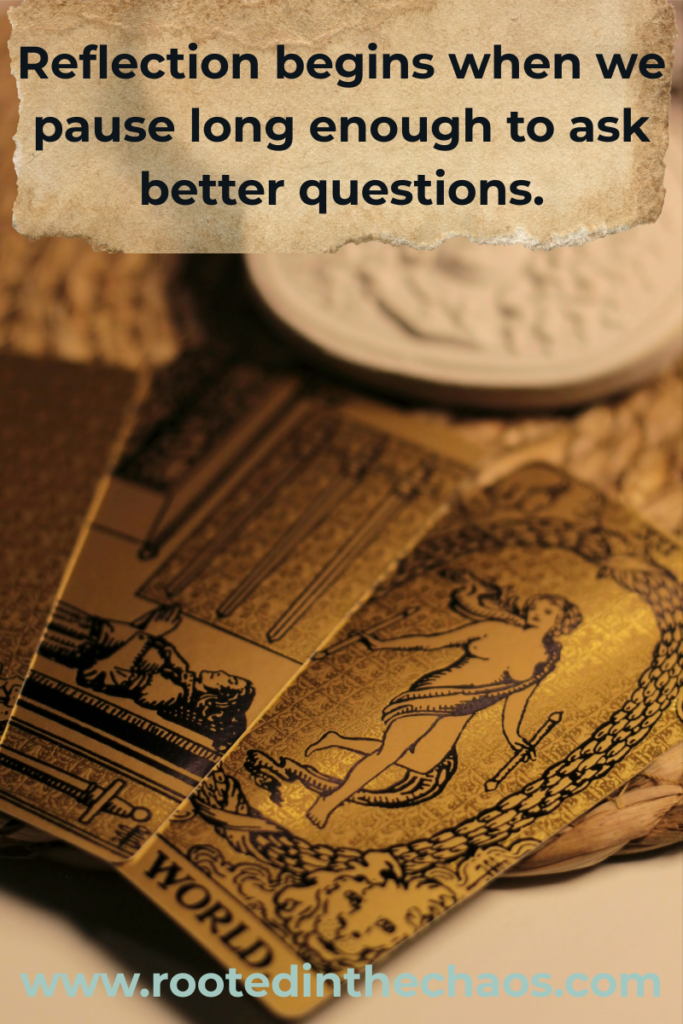
At its most practical level, tarot is a structured way to ask good questions.
When you pull a card, you’re not summoning fate. You’re interrupting autopilot. You’re giving your mind a symbol, an image, a story — and asking, “What does this bring up for me?”
A card like The Hermit doesn’t mean “go live on a mountain.” It might mean:
- You’re craving quiet
- You’ve been outsourcing your decisions
- You already know the answer, but you haven’t slowed down enough to hear it
The power isn’t in the card. It’s in your response to it.
Skeptical? Perfect.
You don’t need to believe tarot is magical for it to be useful. You just need to be willing to reflect honestly.
Think of tarot as a prompt generator for self-inquiry:
- What part of this card feels familiar?
- What part makes me uncomfortable?
- What would change if I took this message seriously for one week?
That’s not mysticism.
That’s awareness.
Reflection doesn’t only come through cards. Many of us notice the same patterns through our living spaces and the things we care for. I explore this connection more deeply in Do Plants Reflect Our Emotional State?
Why I Sometimes Ask My Houseplant Instead
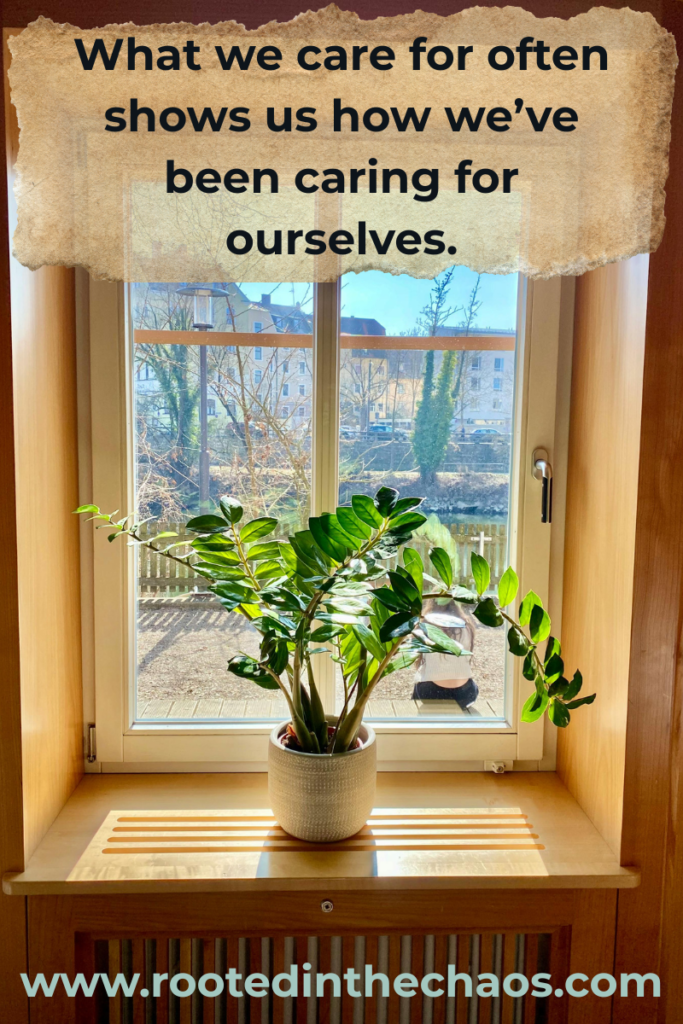
I also “consult” my houseplant. Not because it’s psychic (though it’s doing great, thank you), but because it forces me to slow down and observe.
Is it thriving? Neglected? Leaning toward the light?
When I notice my plant needs water, I often realize I do too — metaphorically or literally. Tarot works the same way.
Both create a pause.
Both reflect back what I’ve been overlooking.
Using Tarot for Realignment (A Simple Practice)
You don’t need a complex spread. Try this:
- Pull one card.
- Ask: “What do I need to notice about my current direction?”
- Write down your first reaction — not the “right” meaning.
- Ask one practical question: “What’s one small adjustment I could make this week?”
That’s it.
No predictions. No pressure.
Learning to realign starts with noticing signals before they become crises. That skill — reading subtle cues and responding with awareness — is the same foundation we use in plant care, which I explore in Why Plant Care Feels Hard (and How We Build Confidence With Houseplants).
Tarot as a Check-In, Not a Command
Tarot doesn’t replace your judgment.
It sharpens it.
It doesn’t tell you who to be.
It reminds you who you already are.
Used this way, tarot becomes less about destiny and more about alignment — a quiet, honest conversation with yourself. Sometimes guided by cards. Sometimes by a plant leaning toward the window.
Both work, if you’re paying attention.
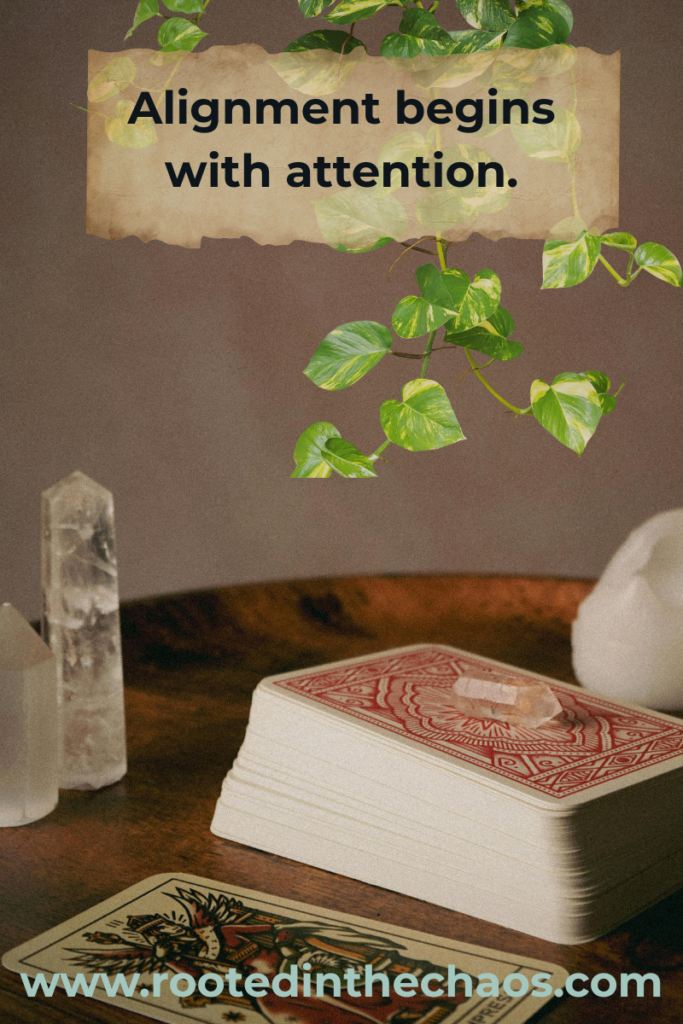
What have your tools — cards, plants, routines — been quietly trying to show you lately?
Leave a Reply